Nothing beats the joy of building something from scratch. I was
fortunate to be part of agile product journeys that went from idea to working MVP
in a matter of weeks.
How can I add value to your
dream team?
As a Sr. UX Consultant
Bringing the team to a shared vision
Identifying key research and ideation activities
Planning and conducting workshops
Pairing with business analysts and dev teams
Maintaining consistency across the product line
Contributing to the programme-level design team and design system
Enabling client designers
UX/UI delivery
Project snapshot
Setting foundation for a new age
school management system
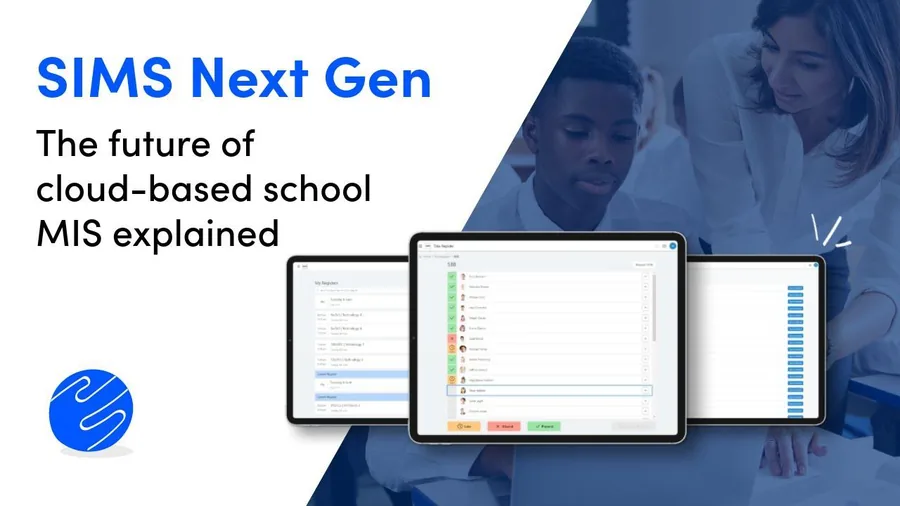
ESS — SIMS Next Gen, the successor
to the legacy SIMS school management information system.
19,000+schools served
6.7mpupils
70%+UK market share by volume
49countries
The plot
When I joined this account, ESS was in a phase of digital transformation.
Next Gen, the successor to the legacy SIMS, was envisioned to stand out among
its new-age competitors.
Client expectations
Kick-start Next Gen modules with a strong foundation of research, design
thinking and strategy
Enable the Assessments and Staff Profile teams at ESS to be self-sufficient
by introducing best practices and ways of working
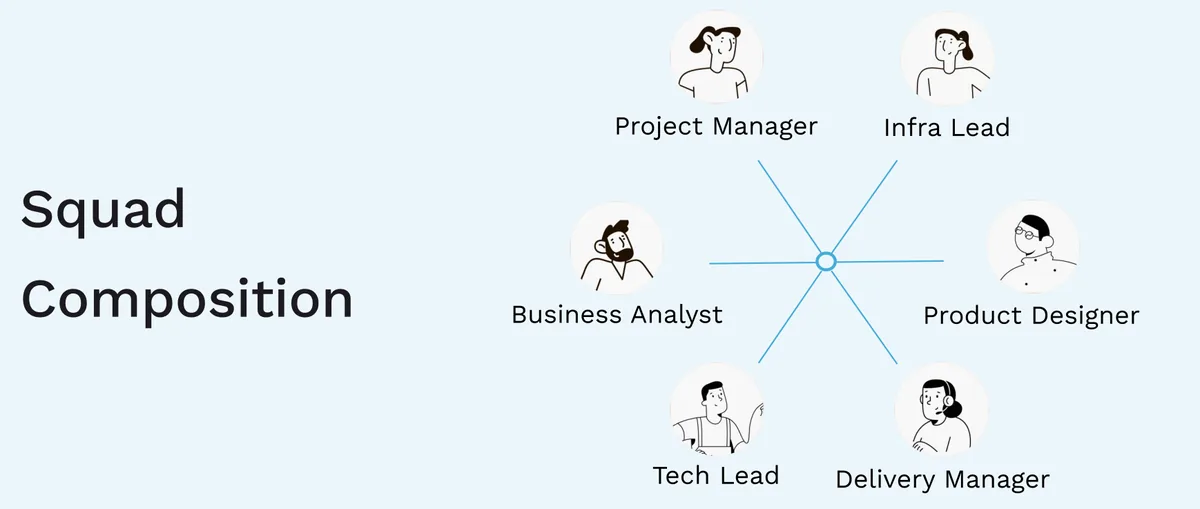
Squad
Project manager, infra lead, business analyst, product designer,
tech lead and delivery manager — with me as the UX consultant.
Idea to working MVP in six weeks
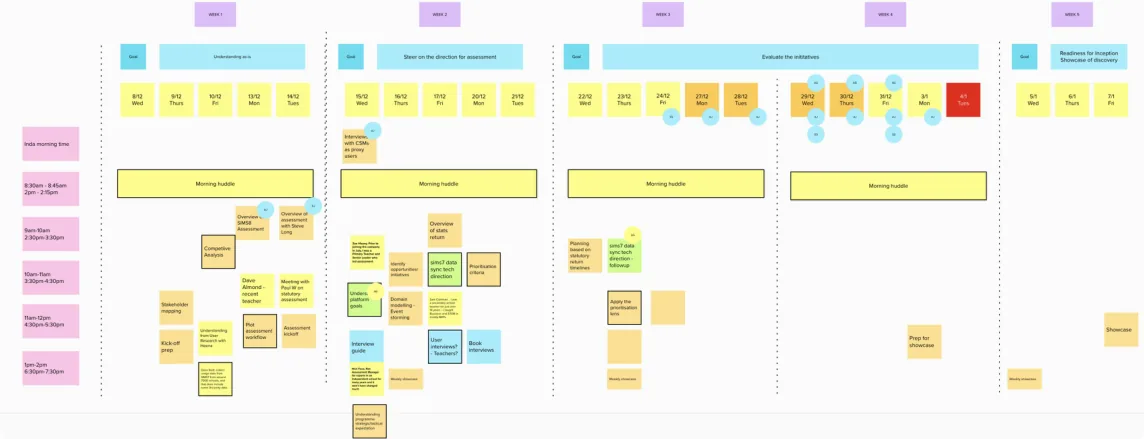
An inception structured week by week, each with a defined outcome — so that by
week five there was something real to test rather than a deck to present.
The inception plan
Week 0 — The plan phase
Creating a clear-cut plan for the next four weeks: identifying the key
activities, the outcomes, and the participants needed for each one — then
setting up the murals and getting access to the client applications we would
need.
The four weeks planned as columns before any of them started. Each
card is an activity with a named owner and an outcome.
Week 1 — Domain understanding
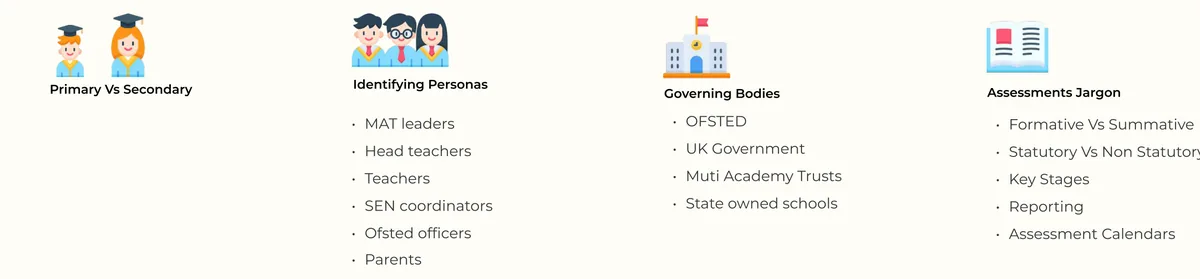
School assessment in the UK is a complex, interconnected system involving
government regulation, multi-academy trusts, state schools, statutory reporting
and special educational needs norms. None of the design decisions make sense
without that grounding.
Personas run from MAT leaders and head teachers to SEN coordinators,
Ofsted officers and parents. The jargon panel on the right — formative versus
summative, statutory versus non-statutory, key stages — is the vocabulary the
product has to speak natively.
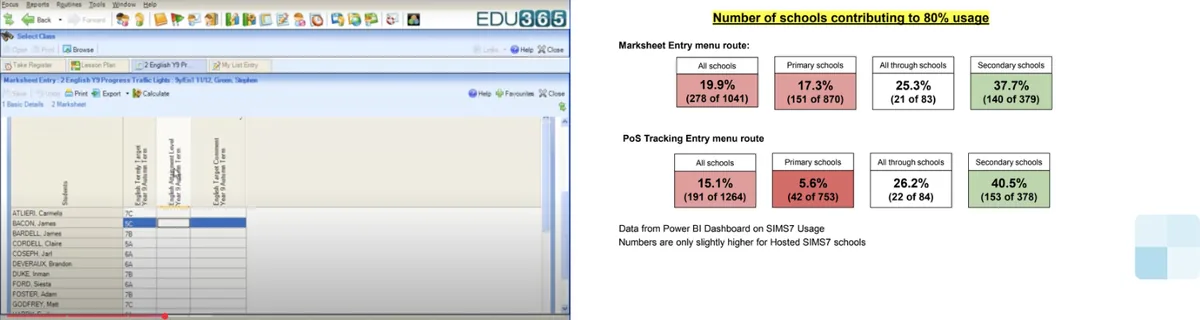
Week 2 — The as-is process
Exploring the old application, understanding how it was actually used,
interviewing stakeholders and experts, gathering existing user research,
doing competitive research, and identifying the gaps.
The legacy application beside the usage data. The tables on the
right are the important half — they show which entry routes actually carry
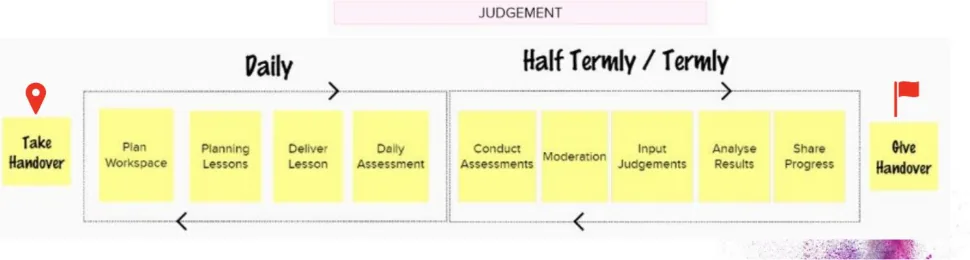
the volume, which is what decided the MVP's scope.The teacher's year, split into daily and termly rhythms. The
judgement moment sits in the termly band — which is where the time crunch
lands.
Week 3 — User interviews
Creating the participant matrix, co-ordinating with recruitment firms,
conducting and documenting the interviews, and building the showcase deck
that brought the squad along with the findings.
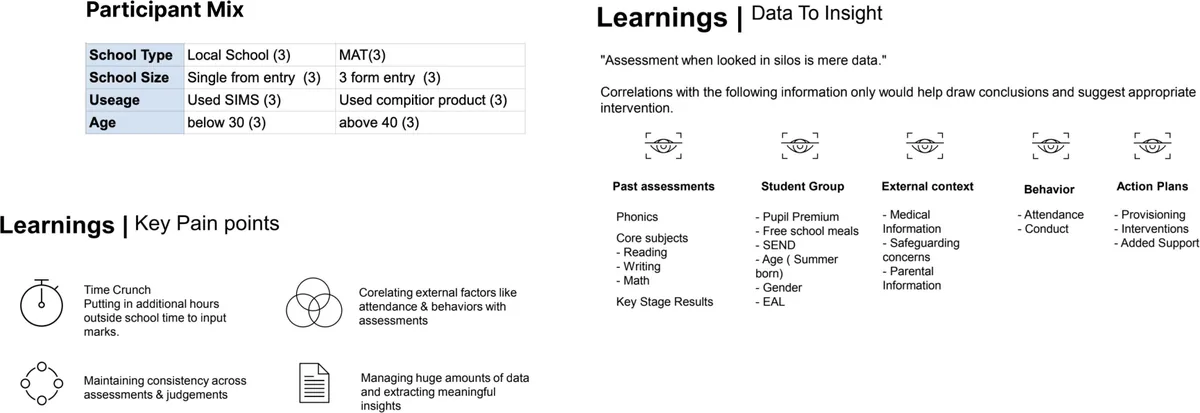
The finding that shaped the product: assessment looked at
in isolation is mere data. It only becomes useful when correlated with past
assessments, student group, external context, behaviour and action plans.
The participant mix deliberately balanced school type, school size,
whether they used SIMS or a competitor, and age. The pain points on the left —
time crunch, consistency across judgements, extracting meaning from volume —
are what the MVP had to answer.
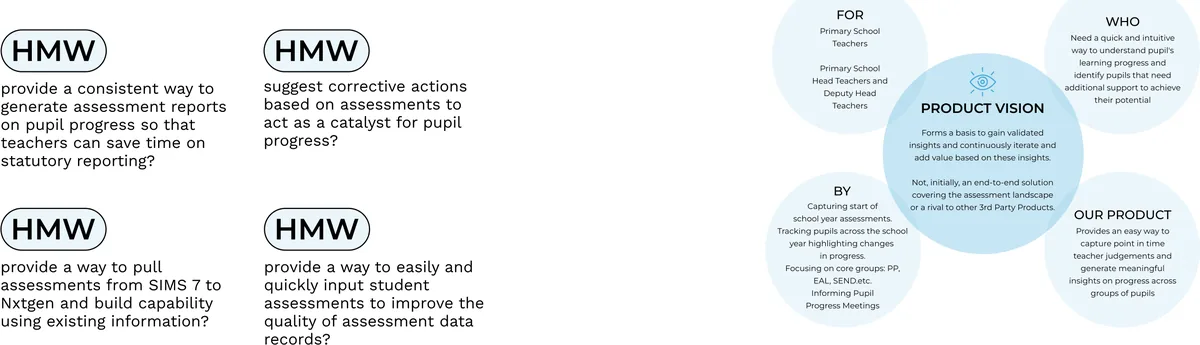
Week 4 — Blazing through to an MVP
Identifying the potential opportunities, then validating and prioritising
the squad's vision — converting the research into "how might we" statements
and a single product vision everyone could argue with.
The vision statement is deliberately bounded — it names what the
product is not, as well as what it is: not an end-to-end assessment
solution, and not a rival to third-party products.
Week 5 — Iteration 0
A participatory workshop, usability testing, a feasibility check, identifying
which components already existed in the design system, and onboarding the
client's own designer so the team could carry it forward without us.
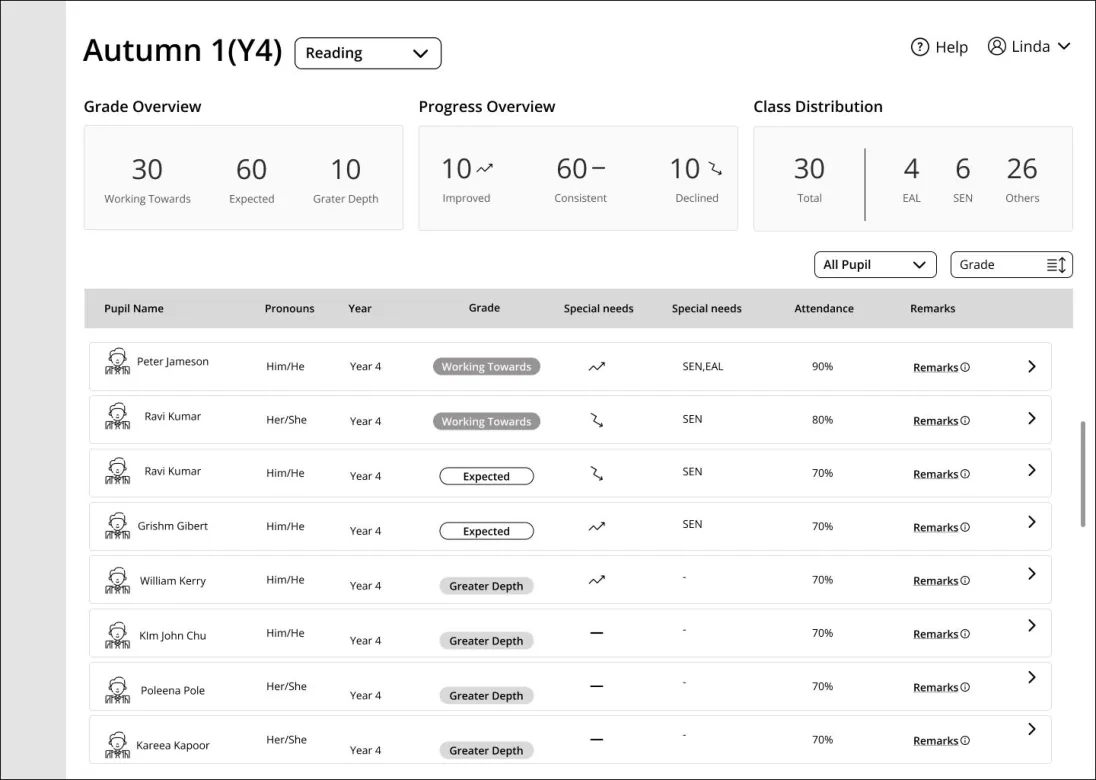
Grade overview, progress overview and class distribution sit above
the pupil list — the correlation finding from week three, turned into a layout.
The thin-slice MVP
Insight
Assessments in primary schools are conducted informally during classes and
while reviewing homework. Teachers rely on personal judgement to evaluate a
pupil's ability against statutory learning goals, and each pupil is assessed
on their individual growth trajectory — making the process highly personalised
and spontaneous.
Delivered solution
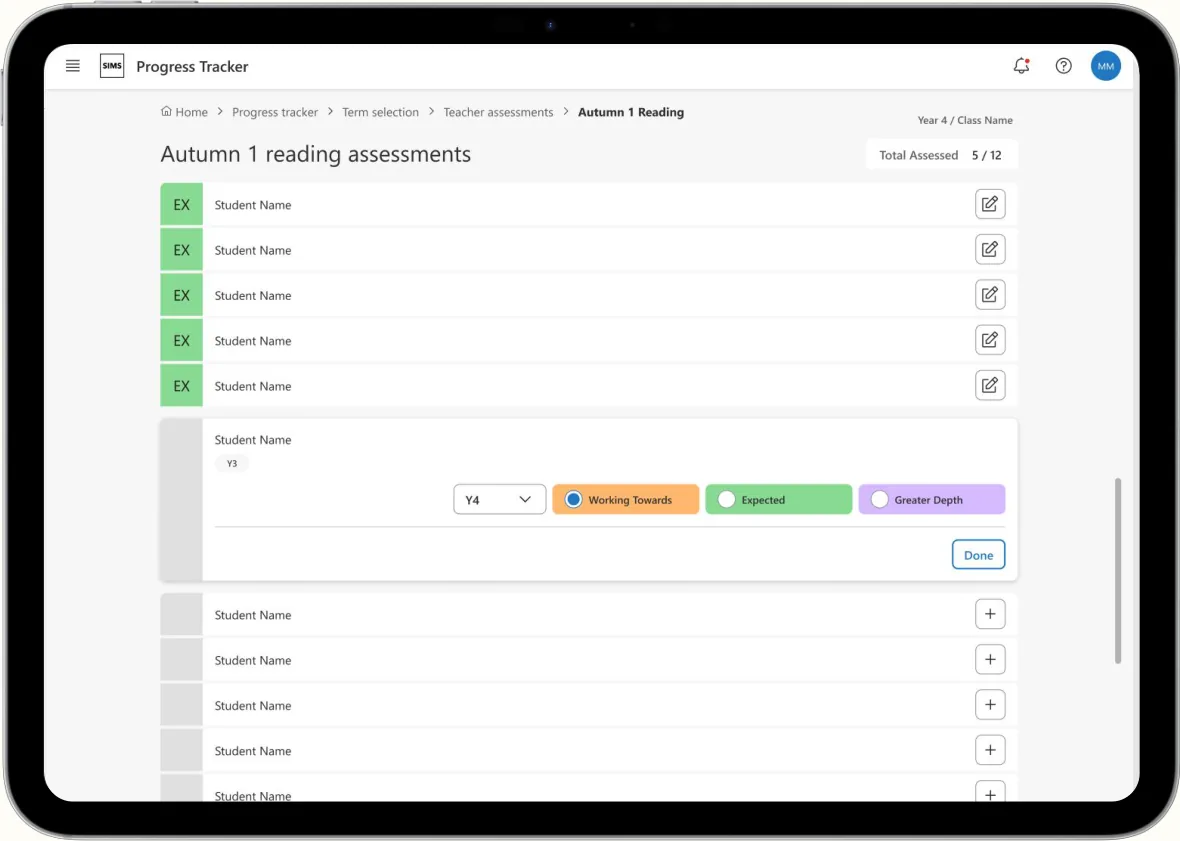
A lightweight iPad web app that lets teachers capture ad-hoc assessments in
real time. It acts as a thin-slice MVP: the foundation for deeper insight into
learning progress, patterns and personalised intervention.
Grades set inline, one tap per pupil, during the lesson — rather
than transcribed into a system after school. That is the time crunch, answered.
What the team said
“Supported team 4 through the early stages of discovery and inception. Providing
the context and support required to enable product designers to take ownership
of their work. We are keen to build a collaborative, creative space and the more
involved.”
Grey Dickson · Design Lead
“During the discovery, inception, and early development of the MVP, Vivek
performed well. He effectively put together wireframes and user flows that
supported our MVP solution.”
Alexander James · Product Owner, Assessments
“Well organised activities for the team, clear framework for elements of
discovery and inception that required user research. He understands well how
user research works and is able to communicate easily to the team ways of
working.”
Clement Lhoste · Product Owner, Staff Profile
Similar work — STAN
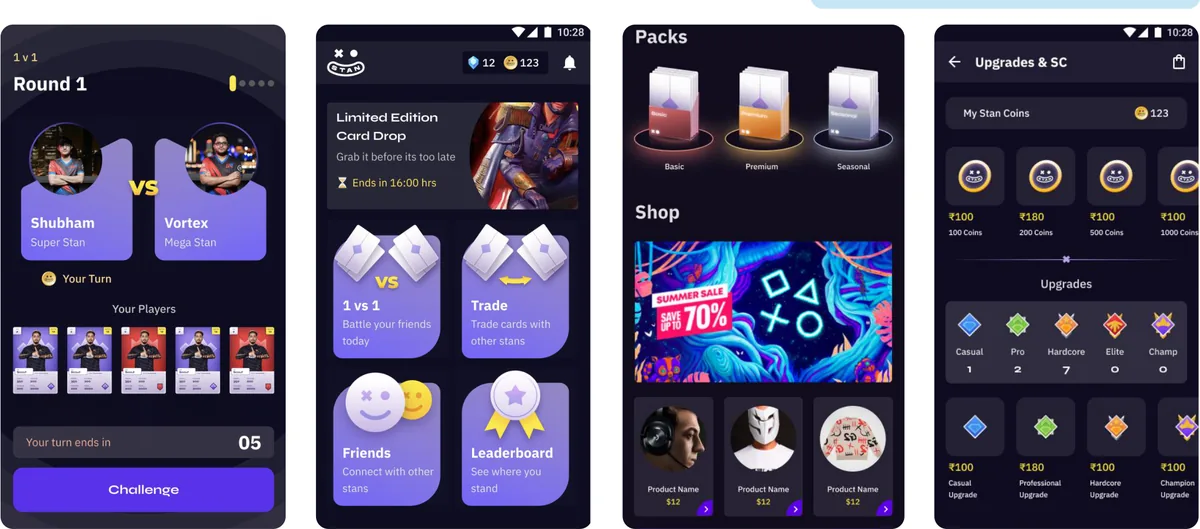
A fan-engagement platform MVP built from scratch, in a two-day design sprint,
to catch the wave of an upcoming PUBG tournament.
Head-to-head rounds, card drops, a packs shop and coin upgrades —
the loop that makes a fan-engagement app sticky, designed in two days.
The original presentation holds the full inception archive — every mural,
workshop artefact and research output at full size.
 Revanth Vivek Kotagiri